I will show you on a map:

Yes, I went back to Sharjah in the United Arab Emirates. Longtime KCU members know that I’ve been there twice before: once for the Publishing Conference in 2024, and then for the Children’s Reading Festival in 2025.
Clearly I love going there, because I jumped at the chance to attend the Publishing Conference again! I was invited to give two talks there:
- Buying & Selling Rights in the North American Comics & Graphic Novel Market
- Building Simple Marketing Systems That Help Authors Succeed: The Publisher as Educator
However, I will admit that as the date — and the US elections — got closer, I started to get a bit worried. A certain somebody was making a lot of threats at Iran, and if you look at the map above, you’ll see that Sharjah is very, very, very close to Iran.
You can literally see Iran from some places in Sharjah. Here’s a photo of the roofdeck at a restaurant. The maître d’ told me that if you stood in a specific place on the roof, you could see Iran in the distance, across the water. (I tried to take a photo but it was too dark to see it.)

In the end, though, I was SO GLAD I went, despite being nervous about traveling to the Middle East when the US and Iran are at war.
A big reason why I was so happy is that my conversations at the conference with people from all across the world reinforced the idea that creative humans are very similar, no matter where we live (or what type of government is lording over us).
Here are some of the people I met:

At a roundtable with comics publishing people from Korea, Canada, Lebanon, and the Netherlands.

A publisher from Cote d’Ivoire showing me one of his comics.

A comics publisher from Cabo Verde….

A children’s book publisher and author from the UAE…

And Bayan, a publisher from Kazakhstan with a children’s graphic novel based on Kazakh folklore.
She told me that Kazakh culture was almost totally stamped out when Kazakhstan was part of the Soviet Union, and now she’s working hard to resurrect their ancient stories and traditions and help kids learn them through comics. (She also mentioned that she believes this graphic novel is the first book ever to feature a flying camel, a mythical creature from a Kazakh folktale.)
Many people said versions of the same thing to me:
“Our traditional culture was denigrated, suppressed, or neglected, and we don’t want it to be completely lost. We want kids to understand and know the culture of their ancestors, and books are one of the best ways to share it with them.”
As much as we complain about the publishing environment in the United States, it’s much harder for people in many other parts of the world. Many countries have relatively small book markets, very little distribution, and few people with disposable income. Therefore, many of the publishers I met act as publisher, distributor, and bookseller all in one, and subsidize their work with a second job. (That “second job” part probably sounds familiar, right?)
One publisher from Ghana told me that he used to get grants from USAID to support distribution of his children’s books to rural schools… but not anymore.
Honestly, I was staggered by how many inspiring people I met. It was an inspiration fest!!
This is a picture of a young Russian illustrator. She left Russia and moved to a neighboring country two years ago:

She told me that her father is half Ukrainian and she still has family in Ukraine. In fact, she’s collaborating with a Ukrainian writer on a children’s book, but they had to make their agreement verbally, because if they had a written contract and it were discovered by Russian authorities, she said she’d certainly be put in prison if she ever returned to Russia. According to the Russian authorities, making a children’s book with a Ukrainian constitutes “supporting terrorism.”
The photo below shows Aung from Myanmar, Paolo from the Philippines, and Fatima from Sudan.

Aung is chair of the Myanmar Publishers and Booksellers Association, as well as a children’s book publisher. He’s working as hard as he can to make sure there are great kids books available for the children in Myanmar, despite the fact that the country is ruled by a military dictatorship and embroiled in civil war.
Paolo is the founder of the Philippine International Comics Festival (PICOF) and Komiket, a non-profit that publishes Filipino comics. Komiket has a really innovative model that combines elements of Pitchfest and the Graphic Novel Bootcamp: creators apply to participate, and a select few are chosen for an intensive period of creative development, culminating in the publication of their comics and an official launch at PICOF.
Like the Russian artist I mentioned above, Fatima had to leave Sudan two years ago due to the war, and now lives in the UAE. She works for a Sudanese-UAE creative services company called Frost Feather Media that provides branding and content via visual storytelling. Fatima told me that her primary role is research, which she loves because she’s so curious about so many things.
She also told me she feels lucky that she was able to restart her life in the UAE — though she wishes she could do what she does in her own country rather than being forced to leave.
I also had dinner with the incredibly inspiring people below: Joel Nomdarkham and Latoya West-Blackwood.

Latoya is the founder of the Jamaica Book Festival and the Caribbean Collective, a professional organization that is supporting publishing infrastructure across the region. She told me about her efforts to help rebuild Jamaican libraries after Hurricane Melissa (59 out of Jamaica’s 109 libraries were badly damaged, and a few were completely destroyed).
Joel, who is the marketing director for Latoya’s organizations and the author of a children’s book about creative careers, is the very definition of charismatic. He positively sparkled when he told us about his dream to start a global book club for men — a movement to encourage men to read more books. When I asked him how he became so passionate about this, he surprised me by saying that he actually only became a reader a few years ago! He said that he never used to read books for fun, but one day a friend gave him a book as a gift, and reading that book ended up changing his life. So now he’s on a mission to spread the love of books to other “guys who don’t read” like his former self.
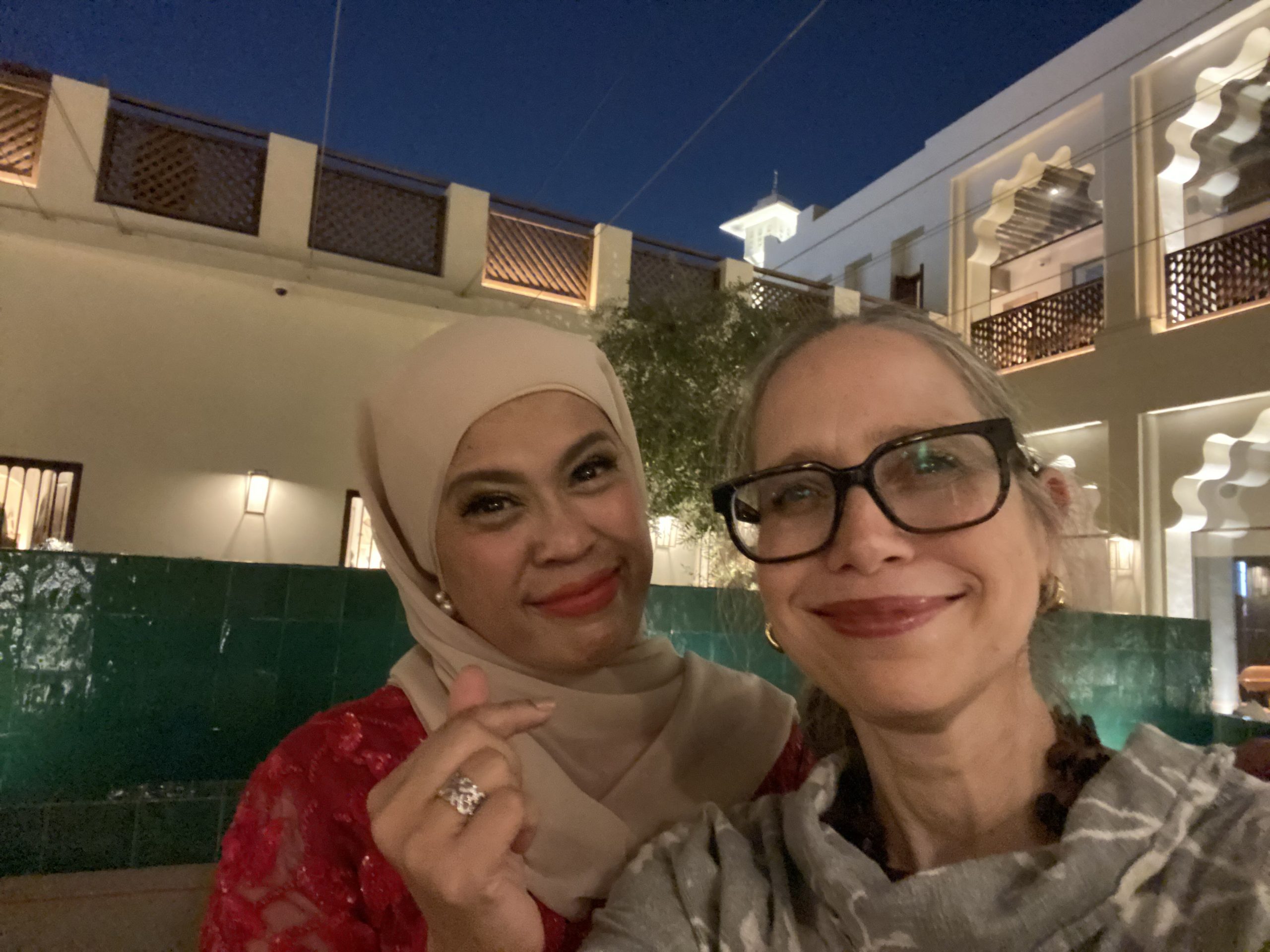
I’m going to end my stories about people I met by telling you about Adibah Omar from Malaysia. This woman is a FORCE OF NATURE:

Adibah is the CEO of Perbadanan Kota Buku, a government agency under the Malaysian Ministry of Education whose mission is to support both the publishing industry and general literacy. The agency provides infrastructure and training to publishers, printers, writers, and illustrators, but crucially, it also promotes reading within schools and libraries.
Their most innovative — and frankly, astounding — initiative is called “Baucar Buku,” which literally translates as “Book Voucher.” Adibah convinced the government to fund this program so that, each year, every single child in Malaysia receives a voucher for 100 ringgit (approximately $25) to purchase books on a dedicated e-commerce platform.
In 2026, 2,174,156 students used their vouchers to buy books. This means that government funding for the vouchers — not including administration and overhead — was approximately $54.5 million (in the realm of governmental funding programs, that doesn’t seem like such a huge outlay to me). Kids are not the only beneficiaries of this program; it also benefits the authors, illustrators, and publishers who get paid for their books!
Can you imagine if the United States had a program like this?
I hope this roundup leaves you feeling buoyed up by the resilience, collaborativeness, and passion of fellow book people around the globe. Let’s continue making the world a better place.
